The Law of Moses, Reiterated

Sunday, July 24, 2022

Deu-ter-on-o-my: What do you know about Deuteronomy?

Yes, the word Deuteronomy has five syllables and rhymes with other -onomy ending words like astronomy, autonomy, economy, gastronomy, taxonomy, and lobotomy.  

But since we are here in church you probably know that I mean the Book of Deuteronomy, not merely the word Deuteronomy. So, let me change the question a bit. What do you know about the biblical Book of Deuteronomy? 

Yes, yes, good, good — it’s located somewhere in the Bible — probably somewhere in the Old Testament, not the New Testament. 

Besides the fact that it’s a biblical book in the Bible, what else do you know about the Book of Deuteronomy? From Bible quizzing days, some of you may recall that Deuteronomy falls roughly, approximately fifth in the Bible’s table of contents. Deuteronomy comes fifth on the list of the books of the Bible, after … hmm… 1) Genesis, 2) Exodus, 3) Leviticus, and 4) Numbers. And then Deuteronomy. By the way, do you happen to recall which book comes next? Joshua.

Some of you may have read through the Bible in a year. If you have, first of all, my sincere congratulations! Way to stick to it. Secondly, you faithful Bible readers probably remember that Deuteronomy has lots and lots… and lots… of laws and statutes, requirements and ordinances. Admittedly, it’s easy to get bogged down and maybe even bored silly while reading through all those laws in the Book of Deuteronomy. But like a serving of vegetables, it’s good for you.

A question or observation may have crossed your mind while you were reading through all those laws in Deuteronomy. And that question is this: “Haven’t I read a lot of these very same laws somewhere else before?” 

Or a similar question might have crossed your mind: “Didn’t I just cover these obscure, old laws in the previous three books? I thought I read through many of these exact same laws in Exodus, Leviticus, and Numbers.” 

And then the obvious follow-up question: “Why, o why? Why must I read all these laws again?”

In other words, Deuteronomy feels like deja vu all over again. It repeats the law repetitively. It seems repetitive, repetitive, repetitive. It seems more than a bit redundant. Well… Ding. Ding. That’s exactly right. And that’s kind of the point. 

In Deuteronomy, Moses is repeating the Law of God one last time before he meets his Maker. But to say that is quite inaccurate because Moses had already met his Maker — and frequently so — before he died. Here’s a necessary correction, then: Moses is publicly repeating the Law of God one last time before he dies at 120 years old. I will say that again, because it’s important. In Deuteronomy, Moses is publicly proclaiming and reciting the Law of God one last time before he retires and expires on top of Mount Nebo.

By the way, the original title for Deuteronomy in Hebrew was Sefer D’varim, which literally means The Book of Words. That might sound like a strange title, because it could be applied to any book whatsoever. “This is a book of words. That is a book of words. Every book is a book of words.” Yet we should understand that the title implies it contains the Final Words of Moses.

Now let’s read a pivotal portion of the Sefer D’varim, the book of Moses’ final words. 

Our scripture reading today is from the Book of Deuteronomy, chapter 30, verses 11-20, from the New International Version.

Hear these instructions from the mouth of Moses, the servant of God:

11 Now what I am commanding you today is not too difficult for you or beyond your reach.

12 It is not up in heaven, so that you have to ask, “Who will ascend into heaven to get it and proclaim it to us so we may obey it?”

13 Nor is it beyond the sea, so that you have to ask, “Who will cross the sea to get it and proclaim it to us so we may obey it?”

14 No, the word is very near you; it is in your mouth and in your heart so you may obey it.

15 See, I set before you today life and prosperity, death and destruction. 

16 For I command you today to love the LORD your God, to walk in obedience to him, and to keep his commands, decrees and laws; then you will live and increase, and the LORD your God will bless you in the land you are entering to possess.

17 But if your heart turns away and you are not obedient, and if you are drawn away to bow down to other gods and worship them,

18 I declare to you this day that you will certainly be destroyed. You will not live [last] long in the land you are crossing the Jordan to enter and possess.

19 This day I call the heavens and the earth as witnesses against you that I have set before you life and death, blessings and curses. Now choose life, so that you and your children may live

20 and that you may love the LORD your God, listen to his voice, and hold fast to him. For the LORD is your life, and he will give you many years in the land he swore to give to your fathers, Abraham, Isaac and Jacob.

Preacher: This is the word of the Lord.

Congregation: Thanks be to God for his word. 

If I were lazy and thought I could get away with it, I might just say, “As a message, this passage from Deuteronomy Chapter 30 speaks perfectly well for itself, therefore, enough said.” Perhaps I could just dismiss us all early. But no — a thoughtful sermon might do some of us some good, so I won’t do that today. Sorry.

Now, in one way, the message of this passage does indeed speak perfectly well for itself. It doesn’t require much, if anything, else. It can stand entirely on its own two feet, unassisted. It doesn’t need anything more. It may be over 3,000 years old; but it has aged remarkably well. It’s in commendably good shape. This passage speaks and speaks powerfully to us today. So in one way, it’s totally true: Nothing more needs to be said. 

But, in another way, these final words from Moses should be talked about here and now, and should be talked about later, over and over. They should be read and re-read. They should be thoroughly researched, and considered for a much longer time than we have here this soggy morning in July. So something more ought to be said. Also true.

The issue, or question, is whether or not we actually heard the passage the first time through. Did you? Now if you really, truly heard it, then you’re good to go. You’re all set. Nothing more needs to be said. But many of us did not really, truly H-E-A-R hear it the first time through. 

Please don’t take offense at that statement. It’s just been proven to be true throughout history. What do I mean? Well, the people to whom it was first presented did not H-E-A-R hear the message. At least, they did not hear it particularly well. 

Why do I say that? I say that because they definitely didn’t take it to heart. They didn’t do it and continue to do it. Somewhere along the line, they let it slide. They neglected and rejected God’s very clear instructions, and in so doing, they did not choose life; they choose disobedience and thus death. They did not continue to walk in obedience to God and hold fast to God; instead, they drifted and let themselves be drawn away further and further. 

Perhaps I should give you a bit more background information about the Book of Deuteronomy at this juncture. The prefix deutero means second; and the remaining-onomy portion of the word kind of means law. When smashed together, the two mean second-law, or, to be more scripturally accurate, a second presentation of the Law of God. 

How is it, though, that Deuteronomy is a second presentation of the Law? Good question; I’m glad you asked. As I mentioned previously, the first presentation of God’s Law is recorded in the biblical books of Exodus, Leviticus, and Numbers. As a rule of thumb, you just need to associate the first presentation of God’s Law with the dramatic events surrounding the giving of the Ten Commandments at Mount Sinai.  I believe Pastor Jacob recently covered those three books. 

You may recall that after the first presentation of the Law, the Children of Israel refused to trust God. They disobeyed God in a variety of ways, and basically blew it over and over and over — ten times, in fact. God got so thoroughly frustrated and furious with them that he wanted to do away with them and just start over with Moses. But Moses talked God out of it. Although it may sound strange to hear that Moses calmed down God, that’s honestly how Numbers Chapter 14 reads. Moses interceded for the Children of Israel. Moses pleaded with God to show them mercy; and so God let them live. All the same, God decided that he would punish that stubborn, rebellious generation by not allowing them to enter the Promised Land. Instead, they would have to wander around the desert aimlessly for 40 years until they expired. Only the 2nd generation would be allowed into the Promised Land. Only children admitted — kids and grandkids only.

Deuteronomy, then, is the presentation of God’s Law to that younger second generation, many of whom would not have remembered the first presentation of God’s Law. They were either too young, or had not been born yet. So right before his death (at age 120) and right before that younger generation entered the Promised Land, Moses presented the Law of God a second time. And that’s the backstory to the Book of Deuteronomy, otherwise known as the Sefer D’varim.      

Notice then, that in Deuteronomy 30:11-20 the 2nd generation and all the subsequent generations of Israelites had been forewarned by Moses in absolutely, positively the clearest possible terms: Choose life, not death. Choose obedience, not disobedience. Choose the LORD your God, not the idols of your neighbors. And yet at some point, the Children of Israel still neglected and rejected Moses’ instructions. They still made the wrong choice. They made the same bad choices as their forefathers (and mothers). But why, o why, would they do that? 

Fast forward to us here, today. When this passage is presented to us, we are likewise forewarned in the clearest possible terms: We must choose life, not death. We must choose to follow the way of the LORD our God, and not follow alternate, trendy, deadly ideologies and idolatries. 

We must beware, because if we’re not careful, and if we do not listen, we might end up like them, like the people to whom Moses spoke. Most of them wandered away from God. Most of them neglected and rejected God’s law. Most of them disobeyed. Hence they chose death, not life.  

We know this. We know this to be true because it is basically how the Old Testament unfolds and ends. Overall, the Old Testament is a tragedy. And the final few chapters of the Book of Deuteronomy forewarn God’s chosen people of the prospect and danger of just such a tragedy. 

If you have read through the Old Testament, you know the prospect of tragedy regrettably becomes the reality of tragedy. The Old Testament doesn’t end well at all. It doesn’t end well because God’s chosen people did not choose well. Although they had been chosen by God and clearly forewarned by God (over and over), they still chose poorly. It’s sad and ironic: although they themselves had been chosen by God, they didn’t return the favor. They did not choose God. And by neglecting and rejecting God, they effectively chose death.   

And so here we are today, confronted with the very same option that confronted them: Choose life or death; choose obedience or disobedience; choose God or the idols of surrounding culture.  But there is hope for us. The good news is that we can do better. We can do better than they did.

Part of the good news is that we live when we do. We have the Gospel, the good news of Jesus Christ. Therefore, we have it far better than they did. In the story of Jesus, we have a far better example. In the New Testament, we have access to far better promises.  And in partnership with the Holy Spirit now available to us, we have far greater potential and far greater power than the Old Testament Children of Israel ever did. And that is good news, indeed. 

So let’s read Deuteronomy 30:11-20 again. This time, let’s listen more carefully and H-E-A-R hear what it says. And let’s keep in mind that unlike Moses’ original audience, we have far more going for us. As the Apostle Paul says in Romans 8:31-32, “If God is for us, who can be against us? He who did not spare his own Son, but gave him up for us all—how will he not also, along with him, graciously give us all things?” He can keep us from falling, and keep us from failing.     

While the Old Testament ends in tragedy and uncertainty, the New Testament ends with the absolute assurance of triumph, if only we persevere by holding fast to Christ. 

So now, let’s revisit our passage for today, Deuteronomy 30:11-20. Let me forewarn you, though: I am going to deliberately misread portions of the passage. You’ll catch on as to why as I do. I will also intersperse reflections after each one of the verses.

In verse 11 Moses says: Now what I am commanding you today is WAY, WAY TOO/not too difficult for you, AND FAR, FAR/nor beyond your reach.

One of Satan’s most common and effective lies is to tell us that God’s requirements are beyond our reach. But as followers of Christ, we are better equipped for obedience than anyone ever. This verse is even more true for us than it was for the Children of Israel. Christ’s commands are not too difficult for us. Obedience is not beyond our reach. In Matthew 11:30 Jesus says that his yoke is easy, and his burden, light, which means that with his help we can live as he requires. Or to quote Paul in Philippians 4:13, “I can do all things through him who strengthens me.”  

In verse 12 Moses says: It is WAY WAY OUT THERE/not up in heaven, so that you have to ask, “Who will ascend into heaven to get it and proclaim it to us, so we may obey it?”

Sometimes we are tempted to believe that only super-saints can actually live holy lives. We think that living a life of obedience will require joining a monastery, or moving someplace isolated and remote. But no, this verse says that obedience is not way out there nor somewhere hidden up in heaven. Now, admittedly, it used to be. Before God made it known and made it available, it used to be way out there. It used to be hidden in heaven. But God changed all that. First he revealed himself to the prophets, like Moses. And then he personally came down to Earth. He became human, a man named Jesus Christ.  And he proclaimed the Gospel to us. Shortly later, he sent the Holy Spirit down to accompany us, indwell us, and assist us.  

In verse 13 Moses says: FOR/Nor is it beyond the sea, so that you have to ask, “Who will cross the sea to get it and proclaim it to us, so we may obey it?”

For us as Christians today, obedience may even reverse this Mosaic proclamation. Since we already do possess the precious message of Christ, obedience may require that we ourselves voluntarily cross the sea to proclaim it, so that others may hear and obey it. And I happen to know that some people in this congregation have already done just that: They have crossed the sea to proclaim the precious message about Christ. And thank you sincerely for service.   

In verse 14 Moses says: No, the word is very near you; it is ON YOUR PHONE AND SOMEWHERE ON YOUR NIGHTSTAND/in your mouth and in your heart so you may obey it.

Originally, Moses meant that God’s word was something they had already heard and learned. It was something they had already memorized and internalized. Again, this can be and should be even more true for us now. Plus, we have the advantage of the Holy Spirit’s immediacy and accessibility. We have the Holy Spirit indwelling the Church and indwelling each one of us as believers individually, reminding us of what Christ taught us, and empowering us to obey it.

In verse 15 Moses says: See, today I set before SOMEONE ELSE/you life and prosperity, death and destruction. 

Like the Children of Israel of old, we are also faced with the same existential choice between life and death. But unlike them, God promises us far more than just temporary life and prosperity. He offers us eternal life, if we but confess our sins, place our faith in him, and persevere in faith.   

In verse 16 Moses says: For I SUGGEST TO/command you today to GIVE LIP SERVICE TO the LORD your God ON SPECIAL OCCASIONS LIKE WEDDINGS, FUNERALS, AND HOLIDAYS.

[to walk in obedience to him, and to keep his commands, decrees and laws; then you will live and increase, and the LORD your God will bless you in the land you are entering to possess.]

Practically speaking, to love the LORD means obedience. To love the LORD means we actually obey him. But frankly, obedience over the long haul is our biggest challenge. We do need to be aware that love will cost us. Obedience to Christ will require that we take up our cross daily and follow him, as Jesus said in Luke 9:23. Daily obedience will require sacrifice. We need to be honest and straightforward with ourselves and with others about that. Nevertheless, it’s truly worth it. Our obedience is well worth the cost of sacrifice. It is well worth the cost of difficult daily discipleship. Every act of faithful obedience will be rewarded, guaranteed. It will be rewarded either in the here-and-now or in the here-after. 

In verse 17 Moses says: But if your heart turns away and you are not obedient, and if you are drawn away to bow down to other gods and worship them, IT WILL BE JUST FINE.

No, it will not be just fine. That is a big grotesque lie. That is not what Moses said. The sentence actually breaks off mid-verse, and leaves the reader to wonder what comes next. A warning does.  

Beware of sin. Beware of gradual compromises. Beware not to neglect and reject God’s ways. Beware of the allure and deception of the quick, pleasurable fix offered by the spiritually dead. These temptations are always a danger to us, especially when we are weak.  

In verse 18 Moses says: I declare to you this day that you MIGHT HAVE A FEW PROBLEMS/will certainly be destroyed. 

You MIGHT NOT/will not live [last] long in the land you are crossing the Jordan to enter…

Disobedience can and does bring severe consequences to us, too. We will reap what we have sown, as the Apostle Paul testifies in Galatians 6:7. Count on it. And yet, at the same time, we are promised immediate forgiveness and purification as soon as we contritely confess our sin and return to following Christ, as scripture also says (in 1 John 1:9).  

In verse 19 Moses says: This day … MUMBLE, MUMBLE, MUMBLE / [ I call the heavens and the earth as witnesses against you that … ]

I have set before you life and death, blessings and curses. Now choose life, so that you and your children may live,

Oops, I omitted and mumbled my way through something. Moses called the heavens and the earth as witnesses against that second generation. In other words, they were told that they were being watched. They were being closely observed. What, then, would they do? How would they choose to live? Eyes were watching them to see what they would do, to see how they would live. 

Most of us here have already chosen to follow Christ, and thus we have wisely chosen life for ourselves. Now, as Christians, we ought to realize that the eyes of others are watching us. We are being observed. We are being noticed. What, then, will we do? How will we behave? One of our primary responsibilities and callings is to live a life of obedience, so as to be an example of faithfulness and to testify to Christ. Also, like Moses, we can and must intercede for God’s mercy, and urge our children and our neighbors to likewise follow Christ and thus choose life.

And finally, in verse 20 Moses says: … and that you may love the LORD your God, listen to his voice, and hold fast to him. For the LORD MIGHT BE OCCASIONALLY HELPFUL /is your life, and he will give you many years in the land he swore to give to your fathers, to Abraham, Isaac and Jacob.

Like the Children of Israel, we must actively choose to love the LORD our God, to listen to his voice, and hold fast to him every single day, knowing that he gives us much more than the promise of a few good years in an earthly promised land. He gives us life right now, and life eternal. Indeed, Christ is our source of life, today, tomorrow, and forever.

Amen.

As we dismiss, our blessing and concluding command comes from Deuteronomy 6:

Hear, O Israel: The LORD our God, the LORD is one. Love the LORD your God with all your heart and with all your soul and with all your strength. These commandments that I give you today are to be on your hearts. Impress them on your children. Talk about them when you sit at home and when you walk along the road, when you lie down and when you get up. Tie them as symbols on your hands and bind them on your foreheads. Write them on the doorframes of your houses and on your gates.   
The Third Seal of Revelation 6

Wednesday, July 13, 2022

The Third Seal of Revelation 6 – Audio Version

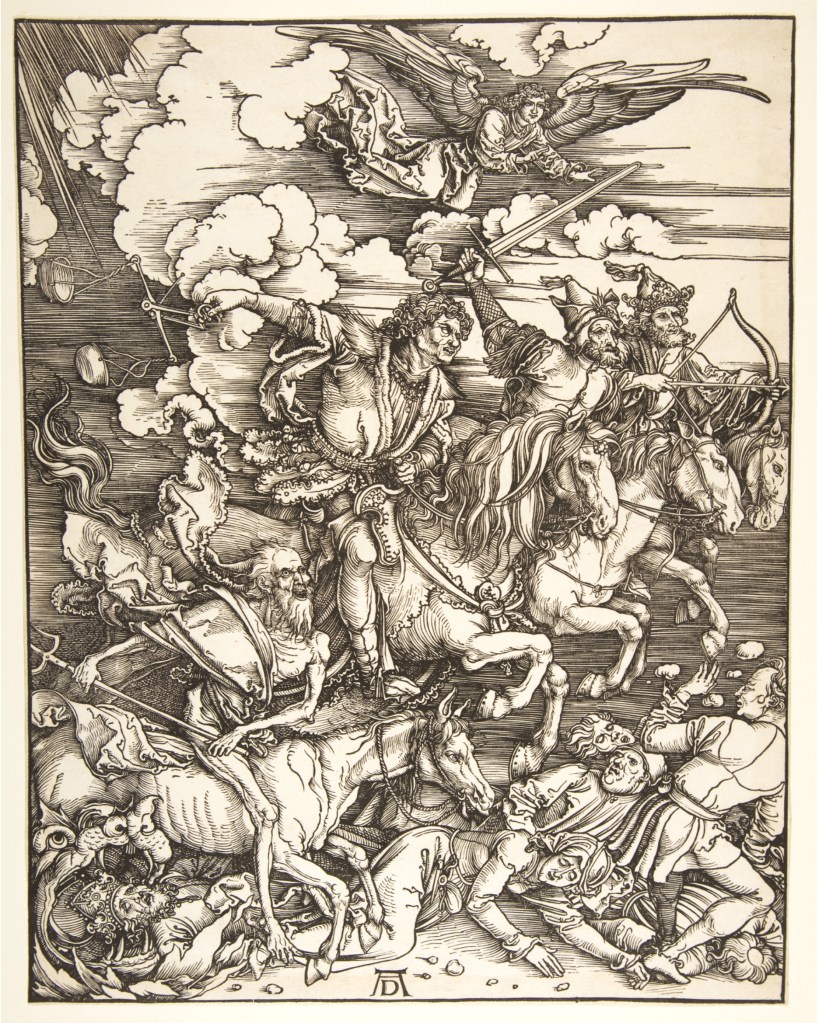
Assignment: In your own words, retell the account of The Four Horsemen of the Apocalypse from Revelation 6:1-8, and then explain the symbolic meaning of one of the four horseman.

Alright, no small undertaking, but assignment accepted. In this essay I choose to explain the symbolic meaning of the third horseman. Now, how do I go about this? How should I retell The Four Horsemen of the Apocalypse? What is the best approach? I guess I should strive to be as succinct as possible, and yet provide enough information for a reader who might be unfamiliar with the Book of Revelation.   

Narratively, each one of the four horsemen follows a predictable pattern. The horseman appears only after some sort of documentary seal has been broken open and a majestic summons has been issued to come forth. And then the observer is given just a brief bit of information about the particular horseman in view. Somewhat surprisingly, observers are only given the briefest of glances at each of the four-and-a-half horsemen before the narration moves ahead and the next horseman is revealed. The whole scenario unfolds in a quick, clipped, dream-like manner. The vision “feels” somewhat random; and yet there is obvious organization to it. It leaves a first-time observer a bit bewildered, wondering what possible meaning is intended. And yet, given its cryptic character, the observer knows that the vision is meant to be deciphered.

The backstory to the Four Horsemen involves a sacrificial lamb who alone has the authority to break open the seven seals to a document — a scroll, to be precise. Among all creatures everywhere throughout all of history, the sacrificial lamb alone is worthy to break open the seals of this scroll and reveal its contents. The observer should realize that the sacrificial lamb symbolizes Jesus Christ.

In the first verse of the chapter, the Sacrificial Lamb breaks open the first seal of some sort of historically significant scroll. Upon being summoned thunderously by one of four heavenly cherubim (that is, one of the Living Creatures) to “Come!” the first of four horseman appears, mounted upon a white horse. He, the unidentified first horseman, holds an archer’s bow, and somehow a crown is given to him. And the verse abruptly concludes with, “He went forth conquering and to conquer.” 

And that’s it. That is all the information we are given about the first horseman. 

When the Sacrificial Lamb breaks open the second seal of the significant scroll, another cherub summons the second horseman to “Come!” Then the second horseman appears, riding a red or scarlet horse. The second horseman is permitted to take peace from the earth, “so that they should kill each other.” He, the second horseman on the scarlet horse, is also armed, but with another sort of weapon: a great sword. 

And that is the extent of the information we are given about the second horseman. 

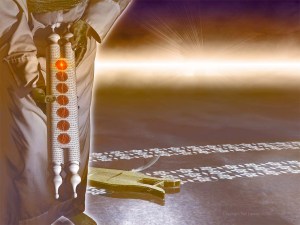
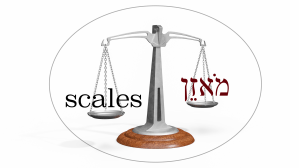
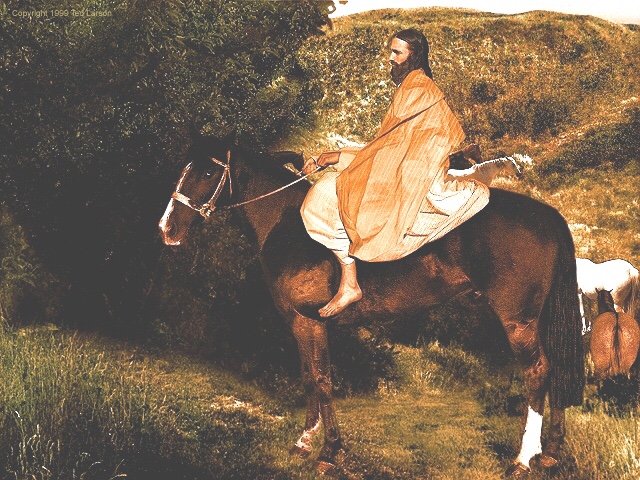
When the Sacrificial Lamb breaks open the third seal of the unidentified scroll, a third cherub summons a third horseman to “Come!” On cue, the third horseman appears, mounted upon a black horse. However, this rider does not carry a weapon, per se. Instead, the rider on the black horse holds a balance, or a pair of scales, in his hand.

The next sentence of the passage has a closing quotation that appears to be directly related to the rider on the black horse. But for a moment, we will skip that closing quotation. Yes, we will just skip it for now. Perhaps it’s not important. Perhaps it’s just incidental, extraneous info. Maybe. Who knows?      

As per the three-peat pattern thus far, the Sacrificial Lamb will go on to break open a fourth seal on the mysterious scroll, after which the fourth and final cherub will summon a fourth and final horseman (actually, twin ghastly riders in tandem) to “Come!” Tellingly, the fourth horse is colored pale green or ashen, that is, the color of a dying person or a corpse. But here I hit the pause button. Rather than continue recounting the rest of the passage about the ghastly twin horsemen, in the remainder of this article I want to take one step backwards and focus intently upon the third horseman, the rider on the black horse. 

For reasons that I shall soon divulge, this third rider might otherwise be called the merchant on the black horse. Now, let’s plunge into greater depth about what this brief passage potentially symbolizes. 

Oh yeah… were you annoyed when I casually skipped over the closing quotation in the third horseman passage? Yeah, that was my intent. I wanted to annoy you so as to pique your curiosity. And here’s what I skipped over: The passage ends with “what seemed to be a voice” — a voice in the midst of the four cherubim, proclaiming, “A measure of wheat for a denarius, and three measures of barley for a denarius; but do not harm the oil nor the wine.”    

What “seemed to be a voice” in the midst of the cherubim should be considered God’s own voice, because the cherubim orbit or circle around the throne of God in heaven. 

Tangentially, someone may wonder why I keep referring to the cherubim as the cherubim, considering that they are never actually called “the cherubim” in Revelation 6:1-7. Good question; I’m glad you noticed and asked. My answer is this: I refer to them as the cherubim (plural) or the cherub (singular) because a careful reading of the Book of Ezekiel leads to that conclusion. In Ezekiel 10:20 the living creatures in Ezekiel’s visions are specifically identified as cherubim. Since the Living Creatures in the Book of Revelation ever-so closely resemble the Living Creatures in Ezekiel, they must be cherubim throughout. I suppose there is a remote possibility I could be wrong with this one-for-one equivalence; but all the available textual evidence points thusly. Please go check it out for yourself. 

Moving along, then… on the assumption that it is God’s own voice proclaiming, “A measure of wheat for a denarius, and three measures of barley for a denarius; but do not harm the oil nor the wine,” a bunch of questions ensue. The first, most general question being: Huh?

Huh? What does that quotation even mean?

In an effort to make sense of the voice’s proclamation, let’s make some initial observations: Inequity seems to be meant here. For some reason, wheat is inordinately expensive, since a denarius is Roman currency amounting to a full day’s wage. Barley is less expensive, but still expensive. Oil and wine are being prioritized by someone or some group, over basic foodstuffs. That probably means that the rich are somehow swindling the poor. This notion of economic inequity connects directly to the rider (or merchant) on the black horse via the scales in his hand. Together, the quotation and the rider/merchant’s scales depict economic inequity, and probably, rampant oppression. 

But why? Why are we presented with this image of economic inequity? And what is the intended connection with the previous two horsemen?

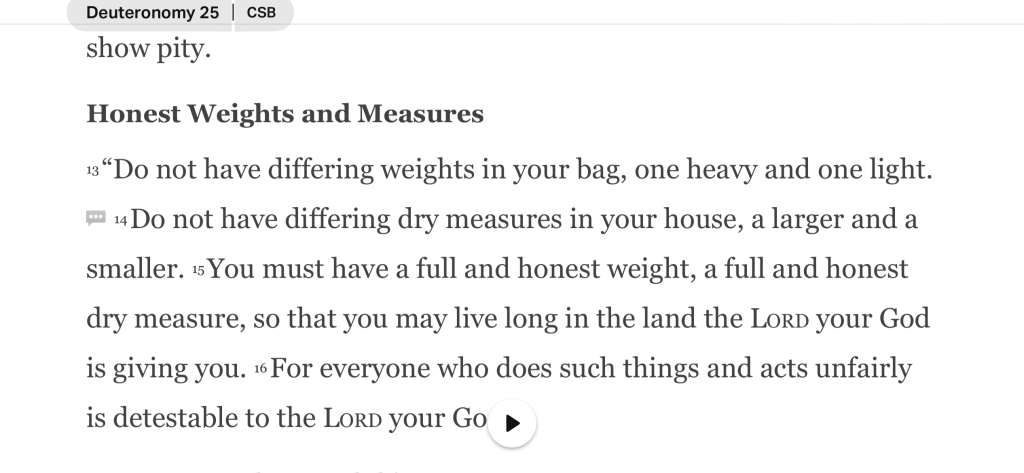
Deuteronomy 25:13-16

There are two likely explanations for why we are presented with these images of the Four Horsemen of the Apocalypse. The first explanation is that the Book of Revelation here shows us, its readers, a generalized overview of how human history invariably and repeatedly plays out. These Four Horsemen are thought to be figurative personifications of the universal destructive forces of human history. Commonly, it is suggested that these four destructive forces are 1) conquest of some sort, whether of a political or ideological nature, 2) bloodshed, violence, and especially, open war, 3) famine or economic inequity, and 4) prolonged, dreadful death, especially by epidemic or some variety of pestilence. This understanding of the Four Horsemen may depend upon passages like Jeremiah 15:2-3 and Ezekiel 14:21, which contain comparable tetrads of “disastrous acts of judgment.” The overall theological point of Revelation 6:1-8, then, would be that however horrifying these historical occurrences may be, they are nonetheless under the full control and delegated authority of the meek Sacrificial Lamb, Jesus Christ. 

To which I say, Amen. It is reassuring to know that the Lamb has authority over the outworking of history. And this chapter of Revelation definitely affirms that truth. Yet there is even more to this chapter to be explained. Although I find this first broad-brush explanation compelling and satisfying to a degree, it does not adequately explain everything happening in the sixth chapter of the Book of Revelation. There are quite a few more “incidental” details that need to be explained. And I never have heard those “incidental” details explained particularly well.    

The second, more detailed explanation is that Book of Revelation here symbolically portrays some very specific — and even datable — historical events. Those specific historical events are four of Israel’s “reckonings,” each of which can be plotted with precision on an Old Testament timeline. In this article, I will advocate this second precise “reckoning” explanation, and focus in particular on how this explanation pertains to the rider on the black horse.     

Here is my assertion, in the tersest terminology possible: The third horseman, the merchant on a black horse, symbolizes God’s climatic judgment on the nation of Ephraim, otherwise known as the northern Kingdom of Israel. This “reckoning” can be dated with precision to 722BC/E, which is when Israel’s capital city of Samaria fell to the Assyrians.

Does this sound like a zany, crazy claim? You might wonder on what possible basis I would venture to make a claim with such historical specificity. After all, the language in Revelation 6:5-6 is rather vague.

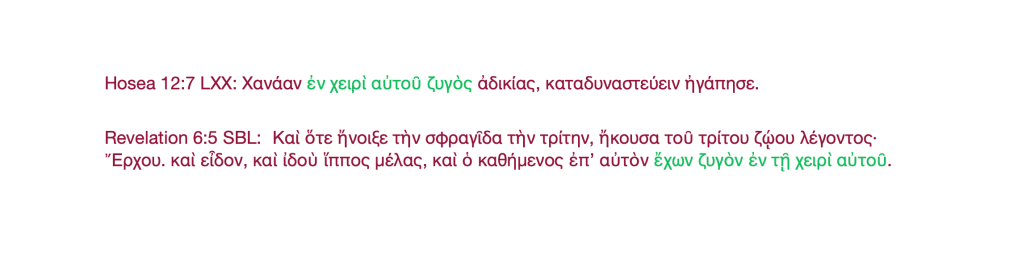
Actually, no it isn’t. It’s not rather vague. Here the language of Revelation is very exact. And the exactness of the wording is very telling. Revelation 6:5 contains a nearly word-for-word quotation of the opening portion of Hosea 12:7, except for the omitted first word (which, when revealed, is also illuminating). But all of this requires some digging. You have to be willing to do some homework to discover the textual overlap of Revelation and Hosea in these two verses.

For those of you who read Greek, here are the two passages.

If you look up the two verses in English you may recognize a vague resemblance, but definitely not a nearly perfect overlap. That is because in your English language Bible the translation of Hosea was made from Hebrew, and not from Greek. But the original recipients and readers of Revelation would have read Hosea in a Greek translation of the Old Testament known as the Septuagint. And the Septuagint rendering of the opening to Hosea 12:7 is very, very close to the relevant portion of Revelation 6:5. It’s so close that it cannot be a coincidence. That should be repeated for emphasis: The textual overlap cannot be a coincidence. Revelation 6:5 contains a quotation of Hosea 12:7. And that makes my Assyrian claim a lot less crazy. In fact, it makes my claim quite plausible, because in context this portion of Hosea is all about how God was about to judge Ephraim by means of Assyria. If you wonder if I have this right, please just read through Hosea 11:1-13:14. But I assure you that this portion of Hosea is all about how God was about to judge Ephraim by means of Assyria. And a key portion of Revelation 6:5 quotes Hosea 12:7. 

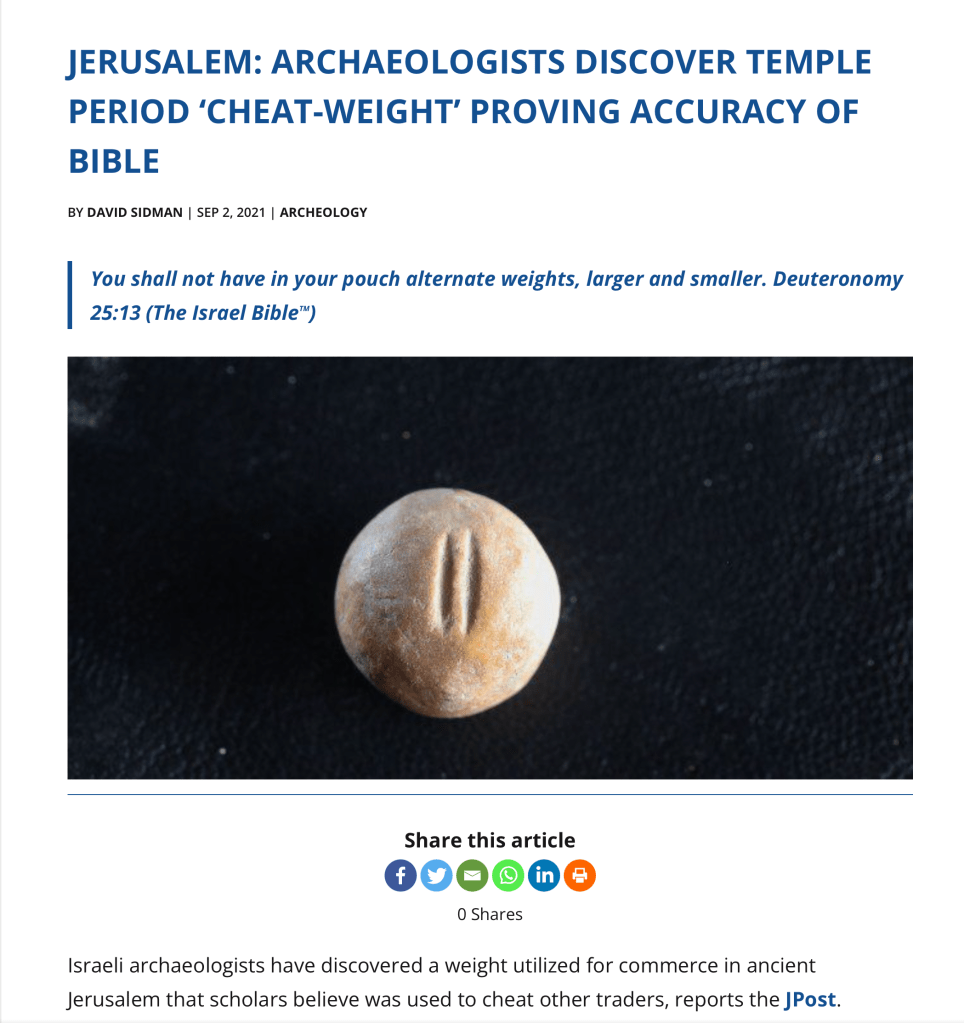
Screen Shot from israel365news.com

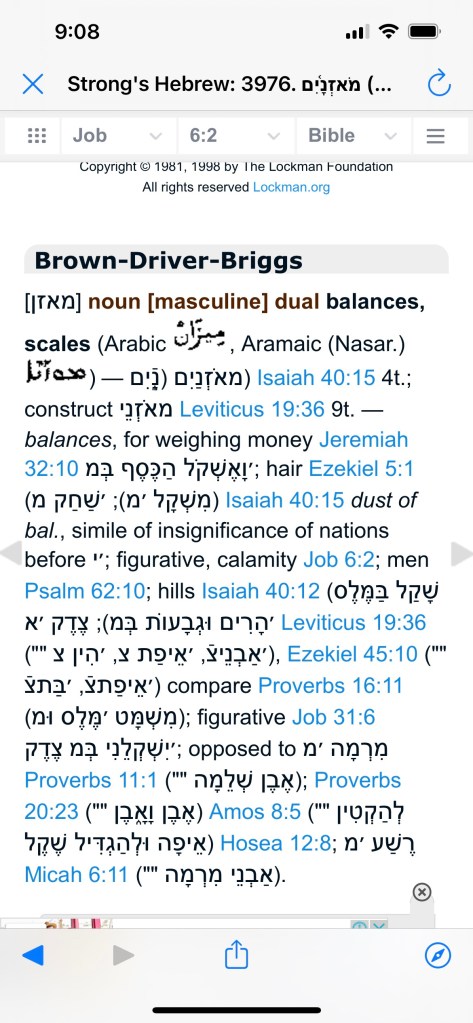
If that is not enough to convince you, then I encourage you to do a biblical word study of just one word. That word is scales. Sometimes it is translated as balances. You will discover that in the Old Testament the word balances/scales appears in three of the minor prophets when they are condemning an act of grave Torah disobedience — the disobedience of economic exploitation (cf. Hosea 12:7; Amos 8:5; and Micah 6:11). These three minor prophets condemn the covenant people of Israel and Judah for their exploitive use of dishonest scales. These strong prophetic denunciations are aimed directly at the northern kingdom of Ephraim/Israel, which fell to Assyria in 722 BC/E. Therefore, scales serve as an excellent symbol for why God brought a final reckoning upon Ephraim/Israel. This is not an inflated argument. The use of the word scales is relatively rare in the Old Testament. It is significant that the use of word scales “happens” to congregate in prophetic literature around the time that Ephraim/Israel fell to Assyria.

Citations of the word Scales/Balances in the OT.

Finally, if the third rider represents the divine reckoning wrought by Assyria, it all fits neatly in the broader context of Revelation 6. Each of the Four Horsemen represents a divine reckoning in Old Testament history. Each follows in the expected and accurate chronological order: the LORD himself as the rider on the white horse in the Exodus; Edom, as the rider on the red horse, whenever Israel and Judah would backslide into idolatry; Assyria, as the rider on the black horse, symbolizing God’s final means of judging Israel; and Babylon, as the rider on the ashen or pale green horse, symbolizing God’s final means of judging Judah and Jerusalem.

In my next post, I intend to cover the fourth rider, which, as I said, should be interpreted as the reckoning wrought by Nebuchadnezzar’s Babylon.     

Zechariah’s Horsemen

Tuesday, July 5, 2022

In my last post, I made a rather bold claim, an audacious claim. I suggested that in one very important and well-known passage from the Book of Revelation our English Bible translators have misled many generations of readers. No, not that our translators intentionally misled us, but their choice of one little word in Revelation 6:4 has misled generations of their readers all the same. In retrospect, the translators could have and should have chosen a better word, I argued. But they didn’t know any better then, so we need to cut them some slack.   

Which word did they mistranslate? Our translators gave us the word earth where they should have given us the word land. In a lexical vacuum, the nuance between the two words may seem quite small, rather insignificant, and merely worthy of a “whatever” shrug. But practically speaking, when readers of Revelation 6:4 first imagine and then interpret the passage, the difference between the two words carries immense consequence. That is because English speakers today automatically imagine “the Earth” in global terms, whereas otherwise they might have imagined “the land” as a more confined geographic locality, which is the correct image, actually. Revelation 6:4 makes better sense if the setting is considered a limited geographic region or locality (that is, the land of Israel), and not the entire planet. Thus the claim of a probable misleading translation error was the opening premise in my last post.

From there, I went on to assert what I believe to be the correct identity of the second Horseman of the Apocalypse: The Red Rider, otherwise known as the Crimson Swordsman, is textually identifiable as… drumroll… Edom, Edom the nation. The Red Rider in Revelation 6:3-4 symbolically represents the historical, biblical nation of Edom, the next-door neighbor and sometime arch-enemy of Israel. In this post, I hope to further establish the claim that the Red Rider actually equals Edom by looking into the Old Testament Book of Zechariah, because the Book of Zechariah is where the Four Horsemen of the Apocalypse first make their debut in the Bible. But before I look into Zechariah, maybe I ought to correct something…

After publishing my previous post, a bit of a doubt came to mind — a doubt about the precision of my opening premise. The doubt eventually solidified into a couple of questions: “What if the mistranslation of Revelation 6:4 began even earlier? What if our English translators simply passed along an earlier mistranslation or misconception from another language?” For the sake accuracy, I realized I ought to go research the possibility. But in which language might the mistake have originated? “Ah yes,” I thought, “I should see how Revelation 6:4 is translated in Latin.” And why Latin? The answer is because Saint Jerome’s Vulgate Latin translation became the official (and effectively the only) version of the Bible in western Europe for over a thousand years. Yep, true story: look it up, if you doubt me. Perhaps then the mistranslation misconception about earth versus land goes way, way further back in time.

And for you Latin readers out there, here is Revelation 6:4 per the Vulgate, followed by the Roman Catholic 1899 Douay-Rheims English translation:

Et exivit alius equus rufus, et qui sedebat super illum datum est ei ut sumeret pacem de terra, et ut invicem se interficiant, et datus est illi gladius magnus.

Revelation 6:4 in the Latin Vulgate Translation

And there went out another horse that was red: and to him that sat thereon, it was given that he should take peace from the earth, and that they should kill one another, and a great sword was given to him.

Revelation 6:4, from the 1899 Douay-Rheims Translation

Like me, you may not read much Latin; nonetheless, like me, you might recognize the above underlined word terra as meaning earth or land or ground. For example, terra firma (i.e., solid ground) or terra incognito (i.e., land unknown) are Latin expressions that are sometimes used today by English speakers. Admittedly, I cannot claim any real expertise in Latin. But I wonder if by means of the “stretch-able” Latin word terra we eventually inherited the somewhat more rigid English word earth. Perhaps our current (mis)understanding of Revelation 6:4 had its origins long before English became English. Perhaps our present-day “earth-must-mean-the-entire-planet” presumption was inadvertently conceived back when the Saint Jerome Bible Translation Committee first translated the Apocalypse into Latin in the decades just before 400AD/CE. The real issue, then, would be how the meaning of just two words — the earth — became more fixed and inflexible in English. Perhaps it all boils down to the ascent of science and, especially, to 20th century space exploration. If such is the case, then NASA may be part of the reason we now misread Revelation 6:4. When it comes to Bible translation and interpretation, stranger things have happened. If any of my readers really do read Latin, please let me know if my speculative supposition here has any validity.

Now if the English speaking world has been misled by a (mis)translation or misconception of Revelation 6:4 for hundreds of years, that raises a whole other set of theological questions. One such question is, “Does that imply that this and other portions of Revelation are better understood now than they were in the past?” The answer to that, of course, would potentially be yes. Frankly, in my opinion the word potentially can be crossed out — potentially, and revised to definitely. Yes, diligent scholarship means we are now able to understand the Book of Revelation better than before. Current efforts to interpret the Book of Revelation do yield valuable insights that are beneficial to the Church (even if the same efforts sometimes also result in wacky theories and interpretations). After all, the Book of Revelation was given by the Triune God as a gift, and those who hear it are promised a blessing (cf. Revelation 1:3). Christ gave the Book of Revelation through John the Narrator to the Church for a reason, otherwise it would not have been given.

Without further ado, I want return to the thesis that the Second Horseman represents the nation of Edom. If I may, I have request: Please humor me here. Please just suspend a negative knee-jerk judgment and grant me the hypothetical possibility that it could be so, even if you’re not yet persuaded. I ask that of you because to persuade some of my readers I probably need to continue making my case. And what case it that? I am attempting to gradually construct an interconnected, cumulative historicist interpretation of the Four Horsemen of the Apocalypse (an interpretation which covers the rest of Revelation Chapter 6, as well). With ample reason, I suggest that the Four Horsemen of Revelation, in order, are actually 1) Yahweh (that is, the LORD of Hosts, who was dreadfully present and active in the Exodus from Egypt), 2) Israel’s “brotherly” neighboring nation of Edom, 3) the aggressive, expansionistic, and brutal Assyrian Empire, and finally 4) the short-lived and yet historically pivotal Neo-Babylonian Empire, which destroyed the City of Jerusalem and Yahweh’s temple around the year 586BC/E. Together, these four horsemen acted as Israel’s most notable disciplinarians. By means of the four horseman, God judged the rebellious and “stiff necked” people of Israel and Judah (cf. Nehemiah 9:26-31 for a succinct retelling of Israel’s history of rebellion and God’s disciplinary reaction).

The Four Horsemen?

To establish the proposition that the Four Horsemen are whom I claim they are, it is essential to look at a few key passages in the Book of Zechariah, because, as noted previously, that is precisely where the Four Horsemen make their biblical debut. Perhaps it goes without saying, but by turning to Zechariah, I am intentionally following the hermeneutical “rule of first mention,” which is just a technical way of saying that an interpreter cannot presume to ignore the first occurrence of any given topic in the Bible. Stated a bit differently: the first mention of a topic in Scripture almost always provides essential interpretive information — information relevant to subsequent topical material. Since the Four Horsemen first appear in the Book of Zechariah, we should not overlook what Zechariah says. Curiously, though, and for whatever reason, a lot of interpreters of Revelation Chapter 6 do overlook the Prophecy of Zechariah. Indeed, this tendency to overlook the imbedded scriptural antecedents is the primary reason the Book of Revelation often gets misinterpreted. Do remember that, because it is not an insignificant point.

The second portion of Zechariah we should consider is Zechariah 1:8-17, which is where we hear Zechariah recount his vision of the Four Horsemen. But first we should glance at verse 7, so as to get ourselves oriented to the historical timing of his seven visions. In verse 7 we learn that Zechariah received his visions “on the twenty fourth day of the eleventh month, the month of Shebat during the second year of Darius.” That, then, is when these visions occurred.

Well,  umm… so what? 

Well, eventually that chronological datum might be — indeed, will be — very important. It will be important because of when it falls on the scriptural timeline. Should you triangulate it with other scriptural chronological data (such as the dates given in Haggai 1:1 and Daniel 9:2) so as to determine an exact date, you will discover that Zechariah’s visions are to be situated just after the prophesied 70-year Babylonian captivity. In Zechariah 1:7, Jeremiah’s prophesied 70 years of exile (cf. Jeremiah 29:10) have just been fulfilled and are now recent history. Yes, the fact that Jeremiah’s prophesied 70-year exile has finally slipped into history will definitely matter in our interpretation of the following vision verses.

And why is that? Why will the Babylonian Exile’s final terminus matter in these vision verses? The answer is because it means that the curse is about to be reserved. Both the vision of Zechariah 1:7-17 and the prophecy of Jeremiah 29:10 point back in unified harmony to a much earlier series of promises from God, promises (of judgment for sin, horror, loss, destruction, exile, and yet of eventual restoration) that are first listed in Leviticus 26:14-45. The very same promises are then certified as having been fulfilled in 2 Chronicles 36:15-23 (crucially, see v. 21). In the vision of Zechariah 1:7-17, the most pertinent of these promises concerns the Sabbath-rest of the Land.

The Book of Zechariah – Medieval Vulgate Manuscript/Codex Gigas

Now let’s look at the actual vision. In this first of Zechariah’s seven visions, he beholds a man at night riding a reddish horse in a wooded area; and behind the horseman are horses of various colors, including another reddish horse, a sorrel horse, and a white horse. But unlike Revelation 6:1-8, there is no black horse in this passage. Zechariah doesn’t know exactly what to make of the horseman and the horses among the myrtle trees, so he turns to someone and asks, “What are these, my lord?” In response, that someone informs him, “I will show you what they are.” And then the horseman himself says, “These are they whom the LORD has sent to patrol the earth/land.”

Okay, so thus far the vision is a bit weird. It gets weirder.        

Then the riders (plural) report in unison to the Angel of the Lord, who is presumably the individual talking to Zechariah. They say, “We have patrolled the earth/land; and behold, all the earth/land remains at rest.” 

For some reason, I imagine these night riders to speak simultaneously in stereo. Please notice that I keep on placing a slash between earth and land. That’s because the original word can be translated either way. But I want to suggest that the best rendering is land, on the assumption that this all alludes back to Leviticus 26. Were these mysterious riders commissioned as septuagenarian park rangers to keep out trespassers, tillers, and would-be squatters? Perhaps these angelic riders ensured that the land got every second of its promised seventy years of rest. I propose that these horsemen thus reported to the Angel of the LORD that they had faithfully completed their assignment. The entire land had indeed received its promised rest.

But wait, there’s more: 

Then the angel of the LORD said, “O LORD of hosts, how long will you have no mercy on Jerusalem and the cities of Judah, against which you have been angry these seventy years?”

Zechariah 1:12, English Standard Version

The mention of seventy years here must not be overlooked. This is an all-important allusion to both Jeremiah 29:10 and 2 Chronicles 36:21. The just-past Babylonian Captivity is implied in this allusion. 

The vision continues:

And the LORD answered gracious and comforting words to the Angel who talked to me. So the Angel who talked to me said, “Cry out, ‘Thus says the LORD of hosts: I am exceedingly jealous for Jerusalem and for Zion. And I am exceedingly angry with the nations who are at ease; for while I was angry but a little, they furthered the disaster. Therefore, thus says the LORD, I have returned to Jerusalem with mercy; my house shall be built in it, declares the LORD of hosts, and the measuring line shall be stretched out over Jerusalem. Cry out again, Thus says the LORD of hosts: My cities shall again overflow with prosperity, and the LORD will again comfort Zion and again choose Jerusalem.’”

Zechariah 1:13-17, English Standard Version

All of which is to say, now that the exile is officially over, God is going to punish the nations that had destroyed Jerusalem and Judah. And God is also going to bless the rebuilding of Judah, Jerusalem, and the Temple. 

As for the Horsemen, the main takeaway from this vision passage in Zechariah is that they were there to make sure that God’s will was accomplished within the Land of Israel, even during the time of Babylonian exile. The Horsemen are thus the agents of God, even when Israel is disobedient and when Israel is absent. This will also hold true in the Book of Revelation, although the Four Horsemen will be revised significantly and might have different identities. The main point of continuity between the Horsemen in both the Book of Zechariah and the Horsemen in the Book of Revelation is that they serve as the active agents of God. They are the enforcers of God’s stated will. And their specific domain is the Promised Land, as opposed to the entire planet.